
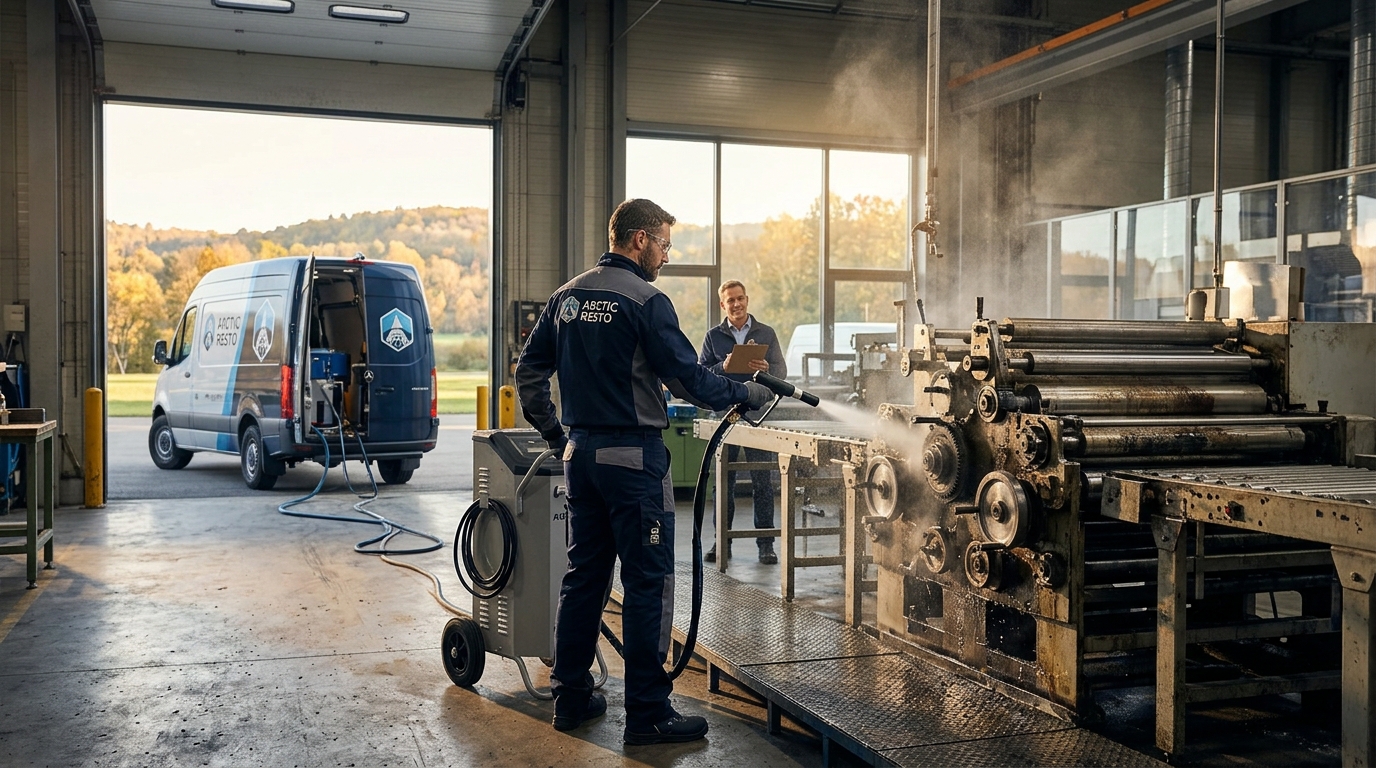
Arctic Resto provides mobile dry ice blasting services for manufacturing equipment in Connecticut. This guide explains how to select a provider, verify credentials, and understand the process. It covers cost drivers, safety rules, and local specifics for the New England region. You will learn how to minimize downtime and ensure a safe, chemical-free clean. For additional details, review the arcticresto com.
How to Choose a Provider
Selecting the right partner for industrial cleaning requires looking beyond basic marketing claims. A reputable mobile dry ice blasting company must demonstrate specific operational capabilities. You need a provider that understands the constraints of a live manufacturing floor. The equipment must be compact enough to navigate tight spaces yet powerful enough to remove heavy industrial buildup. For additional details, review the .
Mobile Capability and Footprint
Industry Experience
Generalist cleaners often lack the nuance required for precision manufacturing. Look for a team that has specific experience with your type of machinery. They should understand the difference between cleaning a conveyor belt and cleaning a sensitive control panel. Experience reduces the risk of accidental damage to components. For additional details, review the Customer Experience.
Questions to Ask Before Committing
Before signing a contract, you must ask targeted questions that reveal the provider's operational depth. Vague answers are a red flag. You need concrete details about their methodology and safety protocols. For additional details, review the Frequently Asked Questions.
Power and Logistics
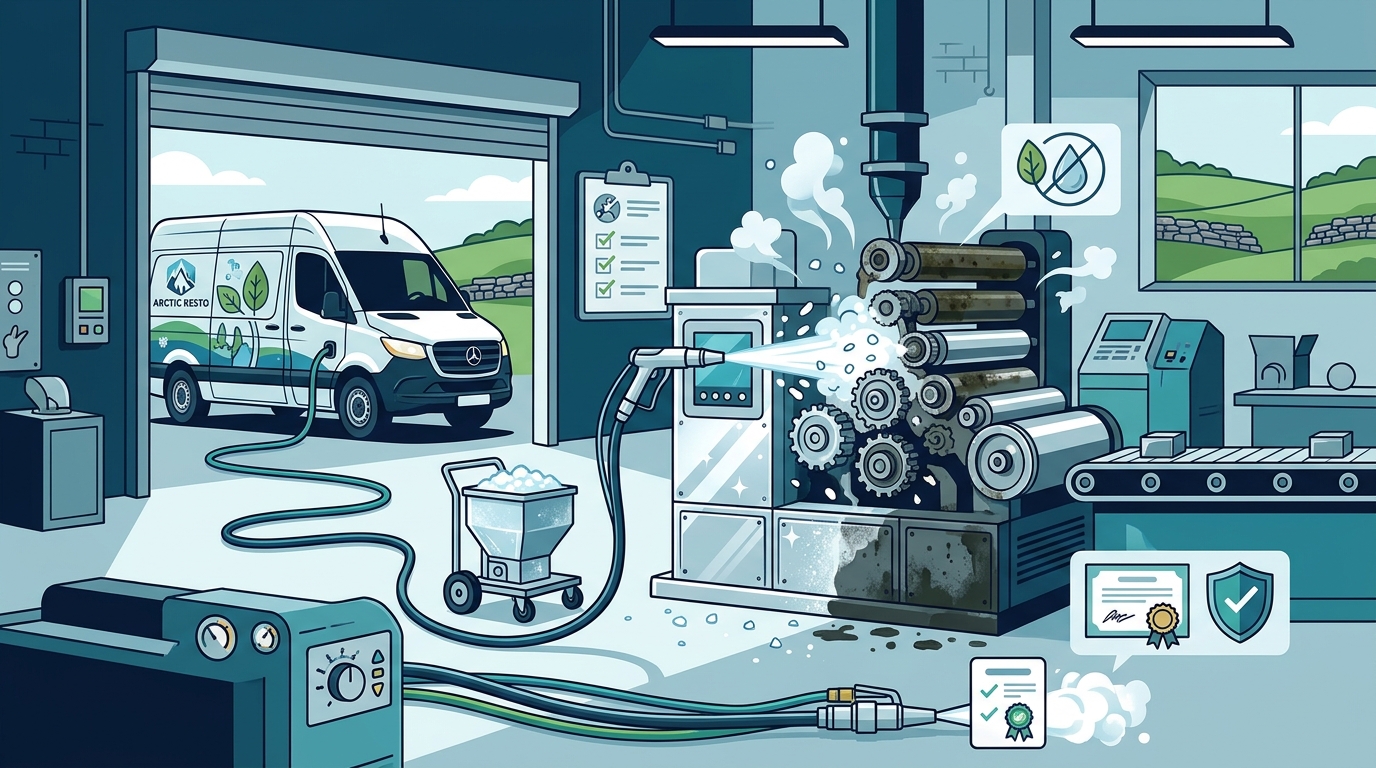
Ask how they generate power on-site. Do they use a generator, or do they plug into your facility? If they use a generator, what is the noise level? This matters if your plant is running during the clean. Also, ask about their setup time. A professional team should be able to set up and begin work within a short window. For additional details, review the About.
Waste Management
Dry ice sublimates into gas, but the dirt it removes does not. Ask how they handle the solid waste. A responsible provider will vacuum up the debris and dispose of it according to local regulations. This prevents secondary contamination of your facility.
Verifying Claims and Credentials
Marketing claims are easy to make. Verification is how you separate serious providers from fly-by-night operators. You must check their insurance and safety records. This protects your business from liability in case of an accident.
Insurance and Liability
Request a Certificate of Insurance (COI) before work begins. This document proves they carry general liability and workers' compensation. Ensure the policy limits are sufficient for your industry. If they cannot provide a current COI, do not hire them. This is a non-negotiable safety step.
References and Case Studies
Ask for references from other manufacturing clients in the region. Call them. Ask about the quality of the clean and the professionalism of the crew. Look for case studies that show before and after photos of similar equipment. This visual evidence is more reliable than verbal promises.
The Process and Timeline
Understanding the workflow helps you plan for minimal disruption. The process is methodical and follows a strict sequence. It is not a chaotic spray-and-pray operation.
Assessment and Setup
Blasting and Inspection
The technician begins blasting. They use a nozzle to direct the dry ice pellets at the target surface. The pellets impact the surface and shatter the dirt. The dry ice then sublimates, leaving no residue. After blasting, they inspect the surface. They may repeat the process on stubborn areas. Finally, they vacuum up the debris and pack up.
Cost Drivers and Budgeting
Cost is rarely a flat rate. It depends on several variables. Understanding these drivers helps you budget accurately.
Size and Complexity
The size of the equipment is the primary cost factor. A large press costs more to clean than a small sensor. Complexity also matters. Equipment with many small parts or intricate wiring takes longer to clean. This increases labor time and cost.
Access and Location
Difficult access can increase the price. If the equipment is in a high bay or a tight corner, it takes longer to set up and clean. Travel distance also plays a role. Providers may charge a travel fee if the job is far from their base.
Common Mistakes to Avoid
Many manufacturers make errors that compromise the clean or their safety. Avoiding these mistakes saves money and time.
Ignoring Safety Protocols
Do not allow untrained staff to be near the blasting area. Dry ice is cold and can cause frostbite. The noise can also be loud. Ensure all non-essential personnel are cleared from the zone. This is a critical safety rule.
Choosing the Cheapest Bid
The lowest bid often reflects a lack of insurance or experience. A cheap provider may use improper techniques that damage your equipment. They may also lack the proper waste disposal methods. Always prioritize quality and safety over price.
Dry Ice vs. Alternatives
Dry ice blasting is not the only option. Comparing it to alternatives helps you make an informed decision.
| Method | Residue | Conductivity | Best For |
|---|---|---|---|
| Dry Ice | None | Non-conductive | Electronics, Live Equipment |
| Water Jet | Water | Conductive | Heavy Rust, Outdoor |
| Sandblast | Sand | Non-conductive | Heavy Coatings, Concrete |
Dry ice is unique because it leaves no secondary waste. Water jets leave water that can cause rust or electrical shorts. Sandblasting leaves abrasive residue that can clog filters. For manufacturing equipment, dry ice is often the safest choice.
Manufacturing Equipment Specifics
Manufacturing equipment presents unique challenges. You must consider the specific type of machinery.
Electronics and Controls
Control panels and sensors are sensitive. Dry ice is non-conductive and non-abrasive. It will not short out circuits or scratch delicate surfaces. This makes it ideal for cleaning control cabinets. You can clean them without disassembly.
Conveyors and Motors
Conveyors and motors accumulate grease and dust. This buildup reduces efficiency and causes overheating. Dry ice blasting removes this buildup without disassembling the motor. This saves significant labor time. It also extends the life of the equipment.
Safety Rules and Protections
Safety is the top priority in any industrial setting. There are specific rules that apply to dry ice blasting.
Personal Protective Equipment
Ventilation
Dry ice sublimates into carbon dioxide gas. In a confined space, this can displace oxygen. Ensure the area is well-ventilated. If the space is enclosed, use a fan to circulate air. This prevents oxygen depletion. It is a critical safety measure.
Connecticut Local Specifics
Connecticut has specific industrial zones and regulations. Understanding these helps you choose the right provider.
Industrial Zones
Connecticut has several major industrial corridors. These areas have strict environmental regulations. A local provider understands these rules. They know how to dispose of waste properly. They also know the traffic patterns and access restrictions. This local knowledge saves time and avoids fines.
Climate Considerations
Connecticut winters are cold. This can affect outdoor work. However, dry ice blasting is often done indoors. The cold ambient temperature can actually help the dry ice sublimation process. It is efficient in this climate. A local provider is accustomed to these conditions.
Timing and Scheduling
Timing is critical for minimizing downtime. You must schedule the clean during a planned maintenance window.
Planned Maintenance
Coordinate the clean with your regular maintenance schedule. This allows you to inspect the equipment after the clean. It also ensures you have the necessary parts on hand. This minimizes the total downtime. It is a strategic approach to asset management.
Emergency Response
Long Term Results
The benefits of dry ice blasting extend beyond the immediate clean. It has long term impacts on your operation.
Equipment Longevity
Regular cleaning prevents wear and tear. It reduces the strain on motors and bearings. This extends the life of your equipment. It delays the need for costly replacements. It is a proactive maintenance strategy.
Efficiency Gains
Key Takeaways
- Choose a provider with specific manufacturing experience and mobile capability.
- Verify insurance and safety credentials before signing a contract.
- Ask about power generation and waste management methods.
- Understand that cost depends on size, complexity, and access.
- Avoid the cheapest bid; prioritize safety and quality.
- Dry ice is non-conductive and leaves no residue, making it safe for electronics.
- Schedule cleans during planned maintenance windows to minimize downtime.
- Regular cleaning extends equipment life and improves efficiency.
Frequently Asked Questions
Is dry ice blasting safe for live equipment?
Yes, dry ice blasting is safe for live equipment. It is non-conductive and non-abrasive. It will not damage electronics or sensitive components. It is a preferred method for cleaning control panels.
How long does a typical clean take?
A typical clean takes a few hours. The exact time depends on the size and complexity of the equipment. Setup and teardown add to the total time. A professional team works efficiently to minimize downtime.
Does dry ice blasting leave any residue?
No, dry ice sublimates into gas. It leaves no secondary waste. The dirt is removed and vacuumed up. This makes it a clean and efficient process.
Can I stay in the building during the clean?
You can stay in the building, but you must stay away from the blasting area. The noise and cold air can be uncomfortable. Ensure proper ventilation in the work zone. Follow the provider's safety instructions.
How often should I clean my manufacturing equipment?
It depends on the environment and the type of buildup. In a dusty or greasy environment, you may need to clean more often. A quarterly schedule is common for many facilities. Consult with your provider for a recommendation.
Is dry ice blasting environmentally friendly?
Yes, dry ice is made from carbon dioxide. It is a byproduct of industrial processes. It is non-toxic and non-corrosive. It is a sustainable cleaning solution. Learn more: arcticresto com.