
Water-free machinery cleaning is the process of removing contaminants from industrial equipment using dry, non-chemical agents. This approach eliminates the risks of electrical damage, corrosion, and hazardous waste disposal associated with traditional wet cleaning. Arctic Resto provides this specialized service using mobile dry ice blasting technology. This guide covers five primary methods for cleaning machinery without water or chemicals, including dry ice blasting, compressed air, vacuum extraction, laser cleaning, and soft media blasting. For additional details, review the arcticresto com.
Dry Ice Blasting
The Physics of Sublimation
The effectiveness of dry ice blasting stems from the thermal shock and kinetic energy of the pellets. When a dry ice pellet strikes a surface at high velocity, it cools the contaminant rapidly. This causes the contaminant to become brittle and crack, making it easier to remove. The sublimation process then expands the volume of the carbon dioxide by approximately 800 times, creating a shock wave that lifts the debris away from the surface. This mechanism allows for cleaning in tight spaces and around delicate components without physical abrasion. For additional details, review the Customer Experience.
Applications in Industrial Settings
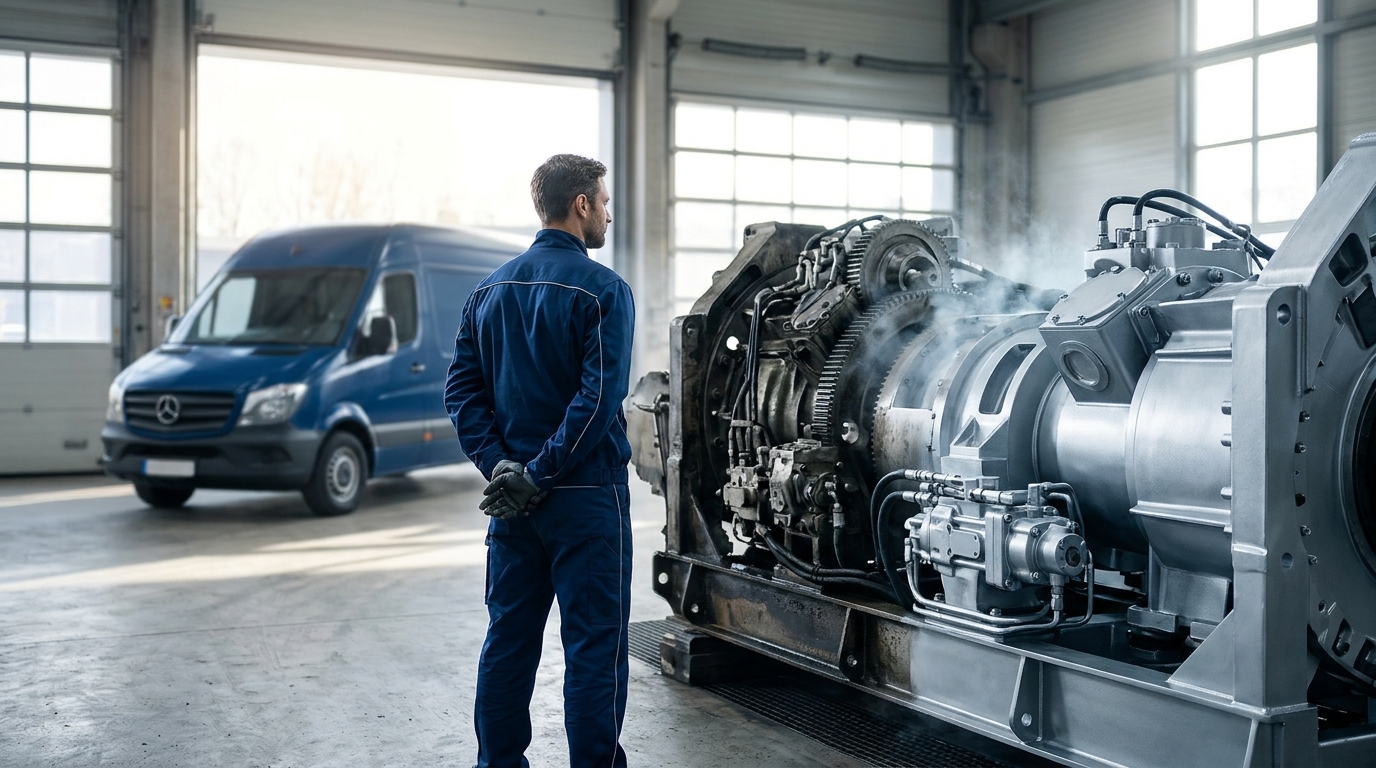
Arctic Resto utilizes fully outfitted Mercedes Sprinter vans to deliver this technology on-site. The mobile nature of the service ensures minimal downtime for clients. The equipment is designed to handle various industrial applications, from removing paint from metal surfaces to cleaning intricate machinery parts. The water-free and chemical-free nature of the process ensures safety for families and pets in the surrounding area. It is a responsible cleaning process that aligns with modern sustainability goals. For additional details, review the Frequently Asked Questions.
Compressed Air Cleaning
Limitations and Risks
Compressed air has significant limitations in industrial environments. It can push dust and debris into sensitive areas, such as electrical connections or bearings, causing potential damage. The high velocity of the air can also create static electricity, which may attract more dust or damage sensitive electronic components. Furthermore, it does not address the root cause of contamination, such as oil leaks or chemical residues. It is a maintenance tool rather than a deep cleaning solution. For additional details, review the About.
Best Use Cases
This method is best suited for removing loose particles from non-critical surfaces. It is commonly used in manufacturing plants to keep workstations clean. However, for thorough machinery cleaning, it is often insufficient on its own. It should be combined with other methods for optimal results. The lack of secondary waste makes it an environmentally friendly option for light cleaning tasks.
Vacuum Extraction
Industrial Vacuum Systems
Integration with Other Methods
Vacuum extraction is rarely used as a standalone deep cleaning method. It is most effective when used after dry ice blasting or other abrasive cleaning techniques. The vacuum captures the debris that has been removed from the surface, preventing it from settling elsewhere. This integration ensures a thorough and clean result. It is a critical component of a water-free cleaning workflow.
Laser Cleaning
Types of Lasers
There are several types of lasers used for cleaning, including pulsed and continuous wave lasers. Pulsed lasers deliver energy in short bursts, which is ideal for removing thin layers of contaminants. Continuous wave lasers provide a steady beam, which is better for larger areas. The choice of laser depends on the specific application and the type of contaminant. Each type has its own advantages and limitations.
Advantages and Limitations
Soft Media Blasting
Media Types
The choice of media depends on the application. Sodium bicarbonate is a common choice because it is biodegradable and non-toxic. Corn cob is another popular option, especially for food-grade applications. Both media are soft and will not damage the underlying surface. The size of the particles can be adjusted to suit the specific cleaning task. This flexibility makes soft media blasting a versatile tool.
Disposal Considerations
Unlike dry ice, soft media does not subliminate. The used media must be collected and disposed of properly. This can be a logistical challenge in industrial settings. The media is often mixed with the contaminants, creating a waste stream that needs to be managed. This is a key difference between soft media blasting and dry ice blasting. It is an important factor to consider when choosing a cleaning method.
Method Comparison
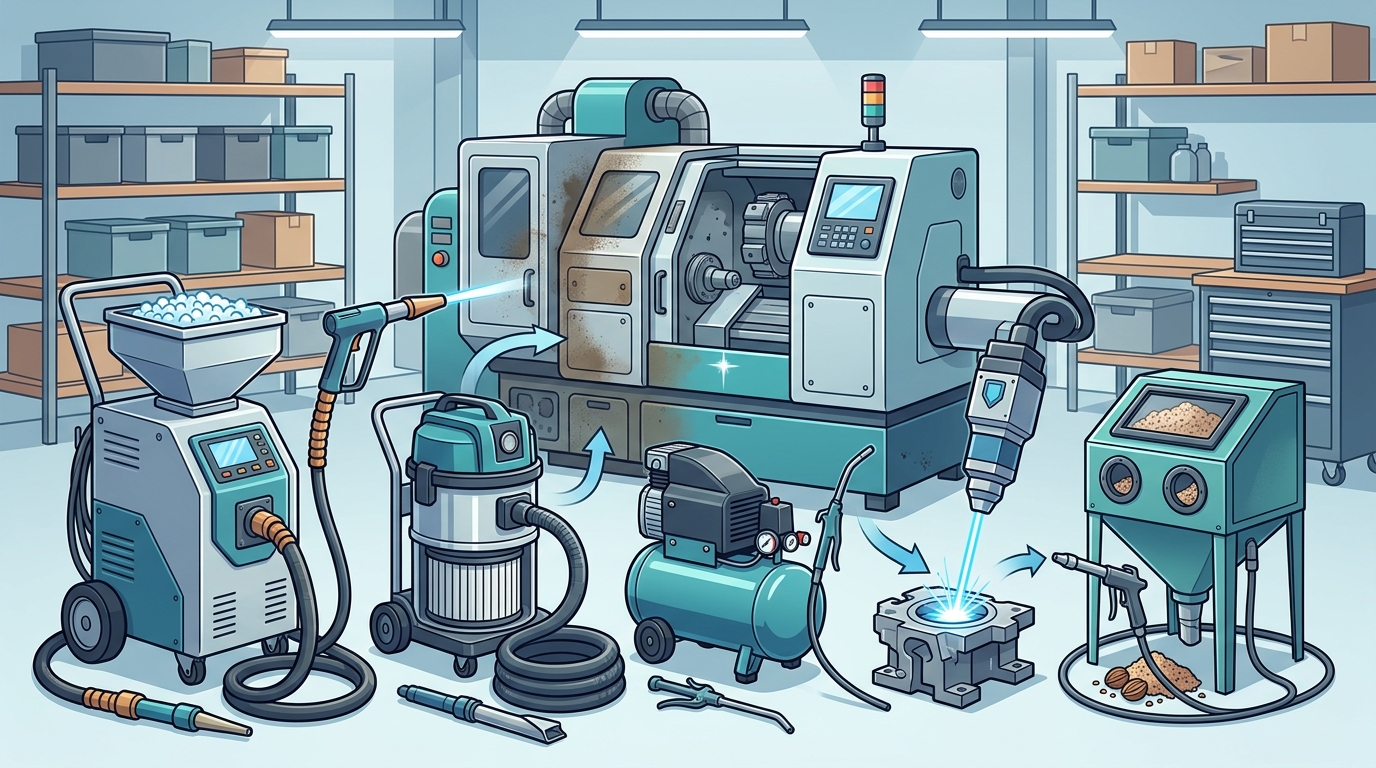
The following table summarizes the key characteristics of the five water-free cleaning methods discussed in this guide.
| Method | Primary Mechanism | Secondary Waste | Best For |
|---|---|---|---|
| Dry Ice Blasting | Sublimation and Kinetic Energy | None | Sensitive Electronics, Food-Grade Equipment |
| Compressed Air | High-Pressure Airflow | None | Loose Dust, Preliminary Cleaning |
| Vacuum Extraction | Suction | None | Debris Capture, Post-Cleaning |
| Laser Cleaning | High-Intensity Light | None | Precision Removal of Coatings |
| Soft Media Blasting | Non-Abrasive Particles | Yes (Media) | Delicate Surfaces, Grease Removal |
Key Takeaways
- Dry ice blasting is among the most versatile water-free method, leaving no secondary waste.
- Compressed air is effective for loose debris but can push contaminants into sensitive areas.
- Vacuum extraction is essential for capturing debris after other cleaning methods.
- Soft media blasting is gentle but generates waste that must be disposed of.
- Arctic Resto provides mobile dry ice blasting services with minimal downtime.
- Choosing the right method depends on the specific contaminants and surface sensitivity.
- Water-free cleaning is safer for the environment and reduces hazardous waste disposal costs.
Frequently Asked Questions
Is dry ice blasting safe for electronics?
Yes, dry ice blasting is safe for electronics. The process is non-conductive and non-abrasive. It does not leave behind any residue that could cause short circuits or corrosion. This makes it an ideal choice for cleaning sensitive electronic components.
Does dry ice blasting require downtime?
What is the difference between dry ice and soft media blasting?
The main difference is the secondary waste. Dry ice sublimates into gas, leaving no waste. Soft media remains as solid particles and must be collected and disposed of. This makes dry ice blasting a cleaner and more convenient option.
Can compressed air damage machinery?
Yes, compressed air can damage machinery if used incorrectly. It can push dust into bearings or electrical connections. It can also create static electricity. It should be used with caution and as part of a broader cleaning strategy.
Is laser cleaning expensive?
Laser cleaning equipment is generally more expensive than other methods. It requires specialized training and maintenance. However, it can be cost-effective for high-precision applications where other methods are not suitable.
How does Arctic Resto handle waste?
Is water-free cleaning better for the environment?
Yes, water-free cleaning is generally better for the environment. It reduces water usage and eliminates the need for chemical solvents. It also reduces the volume of hazardous waste that needs to be disposed of. This makes it a more sustainable option for industrial cleaning. Learn more: arcticresto com.