

How to Choose a Provider
Selecting the right contractor requires looking beyond basic marketing claims. A professional dry ice blasting service is a specialized restoration trade that requires specific equipment and training. You should prioritize companies that operate on a franchise model with standardized quality controls. This ensures consistency in service delivery across different locations. Look for providers that emphasize eco-friendly and water-free methods. These methods are critical for preventing secondary damage like mold or warping. For additional details, review the arcticresto com.
Equipment and Technology
The core of the service is the machinery used. High-quality providers use fully outfitted mobile units, such as Mercedes Sprinter vans, to deliver professional results on-site. This mobility allows for rapid response times. The technology must be industrial-grade to handle heavy soot loads. It should be safe for families and pets, which is a key differentiator from chemical-based cleaning. For additional details, review the .
Experience and Focus
Generalist cleaners often lack the specific expertise for fire damage. A dedicated dry ice cleaning company focuses on this niche. They understand the physics of sublimation and how it interacts with porous surfaces. This focus translates to better outcomes for smoke-stained walls, machinery, and electronics. For additional details, review the Customer Experience.
What to Ask Before Committing
Before signing a contract, you need to ask specific questions that reveal the provider's competence. Do not accept vague answers. Ask about the specific type of dry ice pellets used. Ask about the nozzle configurations available for different surface types. Ask how they handle waste disposal. These questions test their operational depth. For additional details, review the Frequently Asked Questions.
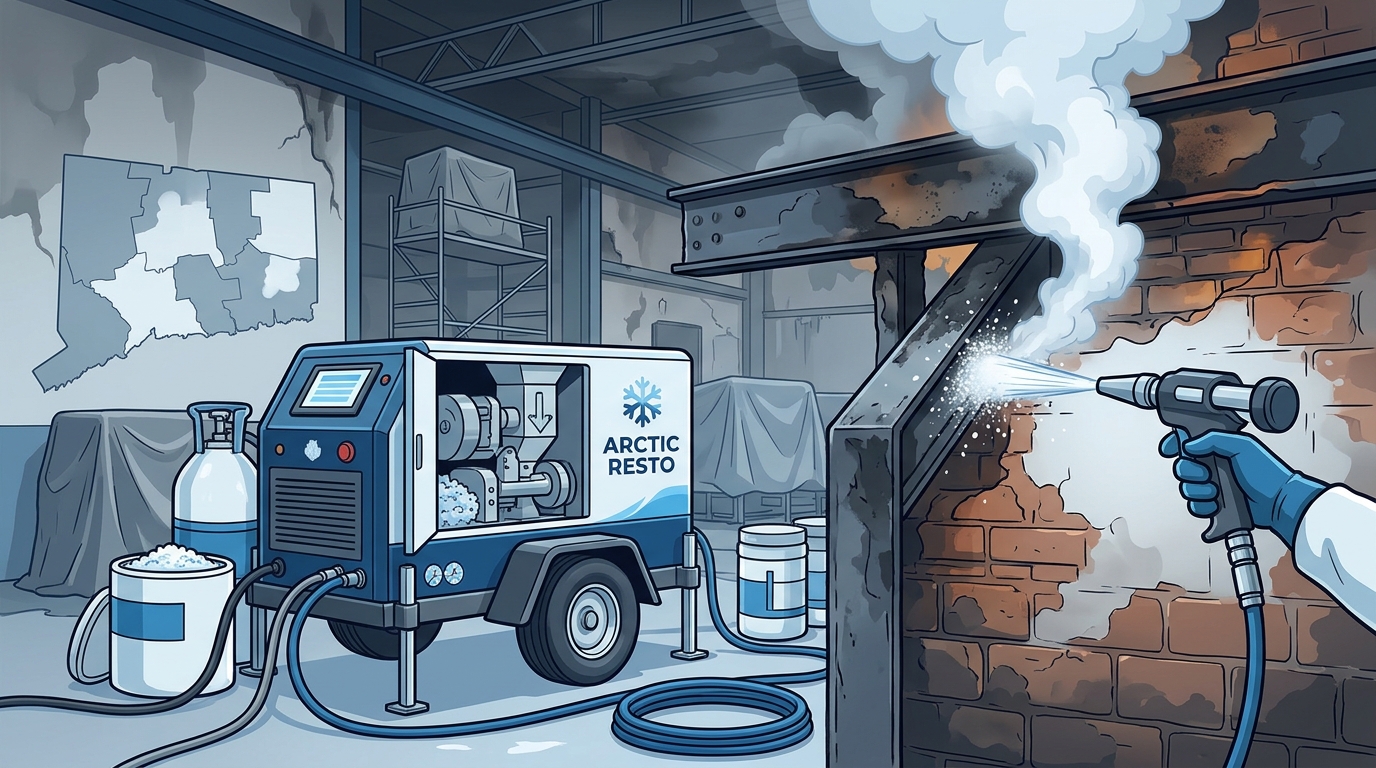
Key Questions for the Contractor
- What is the sublimation temperature of the dry ice used? For additional details, review the About.
- Do you use any chemical additives or only pure dry ice?
- How do you protect sensitive electronics during the process?
- What is your insurance coverage for potential damage?
How to Verify Credentials
Verification is essential in the restoration industry. A certified dry ice blasting technician is a professional who has completed specific training in the application of cryogenic cleaning. You can verify this by checking for industry certifications. Look for memberships in recognized restoration associations. These bodies set standards for safety and efficacy. Do not rely solely on website claims. Cross-reference their credentials with independent registries.
Checking Insurance and Licensing
Ensure the company carries general liability and workers' compensation insurance. Request a certificate of insurance naming you as an additional insured. This protects you from financial liability if an accident occurs on your property. In Connecticut, specific licensing may apply to restoration work. Verify that the business is registered to operate in the state.
How the Process Works
Step-by-Step Workflow
- Assessment and masking of sensitive areas.
- Application of dry ice pellets via specialized nozzles.
- Sublimation of pellets to lift contaminants.
- Vacuuming of dislodged debris.
- Final inspection and quality check.
What It Costs
Costs for dry ice cleaning vary based on several factors. There is no single fixed price for every job. The primary drivers of cost are the size of the area, the severity of the soot, and the accessibility of the surfaces. Complex machinery or intricate architectural details may require more time. Labor rates in Connecticut are higher than the national average. This reflects the cost of living and skilled labor in the region.
Factors Influencing Price
| Factor | Impact on Cost |
|---|---|
| Surface Area | Directly proportional to labor time |
| Soot Severity | Heavier soot requires multiple passes |
| Accessibility | Hard-to-reach areas increase setup time |
| Urgency | Emergency response may carry a premium |
Common Mistakes to Avoid
Homeowners and businesses often make critical errors during the restoration process. One common mistake is delaying the cleaning. Soot is acidic and can etch into surfaces over time. Another mistake is using water-based cleaning on porous materials. This can cause swelling and mold growth. Always use a dry method for initial soot removal. Do not attempt to scrub the soot, as this pushes it deeper into the pores. according to Pollution Prevention Tips
Avoiding Secondary Damage
Using the wrong pressure can damage delicate surfaces. You must ensure the provider adjusts the pressure for each material. Glass, wood, and metal all require different settings. A skilled technician knows these thresholds. They will test a small, inconspicuous area first. This prevents irreversible damage to your property.
Dry Ice vs. Alternatives
Dry ice blasting competes with several other cleaning methods. Each has its own strengths and weaknesses. Understanding these differences helps you make an informed decision. The right method depends on the material and the type of contaminant. For fire and smoke damage, dry ice is often the preferred choice due to its non-abrasive nature.
Comparison of Methods
| Method | Pros | Cons |
|---|---|---|
| Dry Ice Blasting | Non-abrasive, no residue, eco-friendly | Requires specialized equipment |
| Chemical Cleaning | Can dissolve specific stains | Toxic, requires ventilation |
| Sandblasting | Highly abrasive, removes paint | Damages surfaces, creates dust |
Specific Situations
Different scenarios require tailored approaches. For residential homes, the focus is on air quality and family safety. The water-free nature of dry ice is crucial here. It prevents the introduction of moisture into the home. For commercial kitchens, the focus is on food safety and equipment longevity. Dry ice can clean ovens and fryers without disassembly. This minimizes downtime for the business.
Electronics and Machinery
Dry ice is ideal for cleaning electrical panels and machinery. The pellets are non-conductive. They do not short out circuits. The sublimation process removes dust and grease from tight spaces. This extends the life of expensive equipment. It is a safer alternative to compressed air, which can push dust deeper.
Rules and Protections
Restoration work is governed by local and state regulations. In Connecticut, building codes and environmental laws apply. You have the right to a detailed written estimate. This estimate should break down labor, materials, and equipment costs. You also have the right to inspect the work at various stages. Do not sign a contract that waives your right to inspect. Ensure the provider complies with OSHA guidelines for on-site work.
Environmental Regulations
Dry ice is carbon dioxide, which is a greenhouse gas. However, the amount used in cleaning is negligible. It sublimates back into the atmosphere. There are no toxic byproducts. This makes it compliant with strict environmental standards. It is a sustainable choice for eco-conscious clients.
Local Specifics in Connecticut
Connecticut has unique characteristics that affect restoration work. The state has a mix of historic and modern architecture. Older homes may have plaster walls, which are porous. Dry ice is gentle enough for plaster. It does not chip or crack the surface. The climate in Connecticut is humid in summer and cold in winter. This affects the drying process for other methods. Dry ice avoids this issue entirely. It is a year-round solution.
Regional Considerations
Travel time can impact cost. A mobile service based in a central location can serve the entire state efficiently. Look for a provider with a strong local presence. This ensures they are familiar with local building codes and permits. They will know which agencies to notify if required. This local knowledge saves time and money.
Timing and Outcomes
Timing is critical in fire damage restoration. The sooner you act, the better the outcome. Soot becomes more acidic over time. It can etch into glass and stone within days. Delaying the cleaning makes it harder and more expensive. A rapid response minimizes the spread of damage. It also reduces the psychological stress on the occupants. You should contact a provider immediately after the fire is extinguished.
Emergency Response
Long-Term Results
The benefits of dry ice cleaning extend beyond the immediate cleanup. It is a preventive maintenance tool. Regular cleaning of machinery with dry ice prevents breakdowns. It removes buildup that causes overheating. This extends the lifespan of your equipment. For buildings, it preserves the structural integrity of surfaces. It prevents the need for costly repainting or replacement. The results are durable and long-lasting.
Measurable Outcomes
- Reduced maintenance costs for machinery.
- Improved air quality in indoor spaces.
- Preservation of historic architectural features.
- Extended lifespan of electronic components.
Key Takeaways
- Arctic Resto provides mobile dry ice cleaning for fire and smoke damage in Connecticut.
- Dry ice blasting is a water-free, chemical-free, and eco-friendly cleaning method.
- Choose a provider with specialized equipment and verified credentials.
- Ask specific questions about the technology and waste disposal.
- Costs depend on area size, soot severity, and accessibility.
- Delaying cleaning allows soot to etch into surfaces, increasing costs.
- Dry ice is safe for electronics, machinery, and delicate surfaces.
- Local knowledge of Connecticut building codes is essential for compliance.
Frequently Asked Questions
Is dry ice cleaning safe for electronics?
Yes, dry ice is non-conductive and non-abrasive. It is safe for cleaning electrical panels and machinery. The pellets sublimate instantly, leaving no residue.
Does dry ice cleaning use water?
No, dry ice blasting is a water-free process. This prevents secondary damage like mold or warping. It is ideal for porous materials.
How long does the process take?
The time depends on the size of the area and the severity of the soot. A small room may take a few hours. A large commercial space may take several days.
Is dry ice cleaning eco-friendly?
Yes, dry ice is carbon dioxide. It sublimates back into the atmosphere. There are no toxic chemicals or wastewater byproducts.
Can dry ice remove paint?
Yes, dry ice can remove paint and coatings. It is less abrasive than sandblasting, so it is safer for underlying surfaces.
Do I need to be present during the cleaning?
It is recommended that you be present for the initial assessment. You may need to leave the premises during the actual blasting due to noise and dust. Learn more: arcticresto com.