

1. Reduced Downtime During Production Cycles
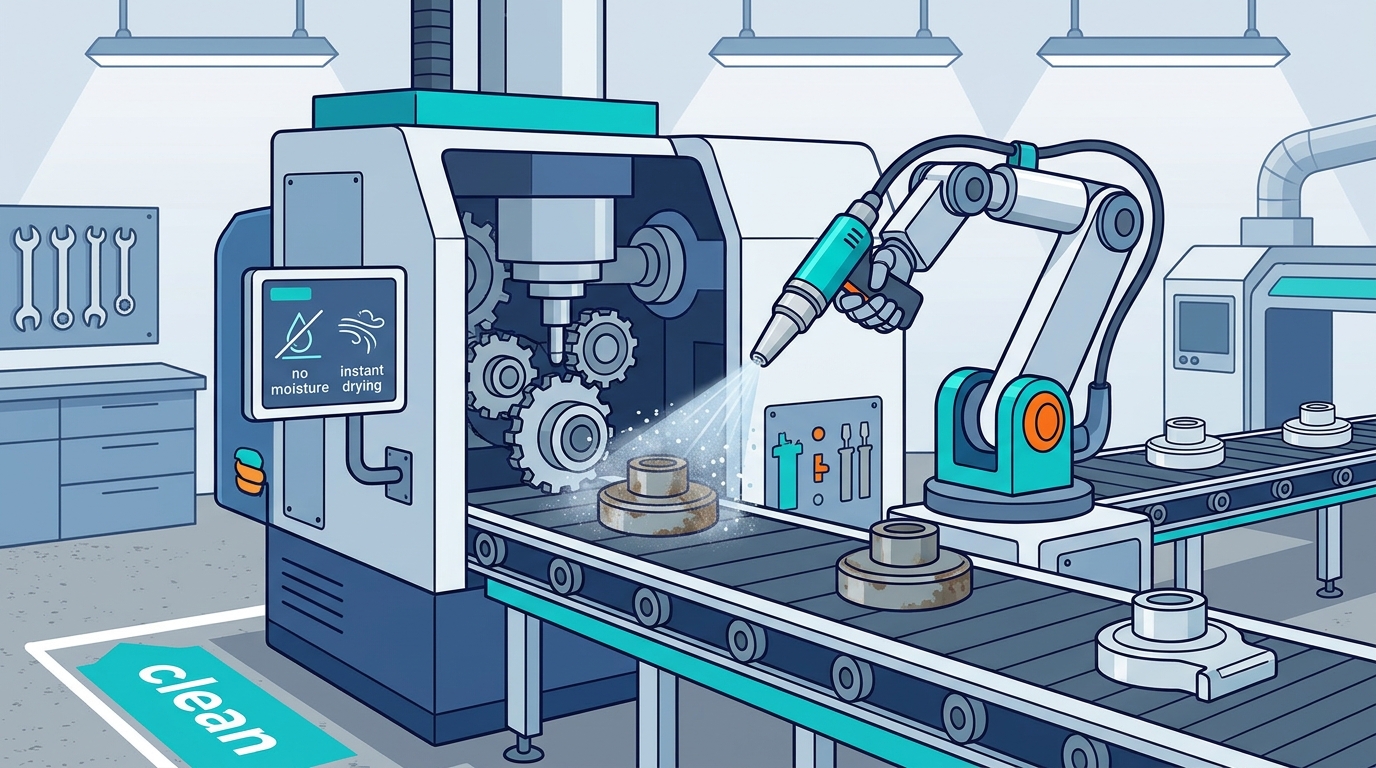
Equipment stays online longer, increasing overall equipment effectiveness. Traditional cleaning often requires shutting down lines for hours or days to allow surfaces to dry. Dry ice cleaning is a dry process that does not leave behind moisture. This allows production to resume almost immediately after the cleaning is complete.
2. Elimination of Secondary Waste Streams
Operators save on disposal costs and simplify waste management. Dry ice sublimates into carbon dioxide gas upon contact with the surface. There is no secondary waste like spent solvents, abrasive media, or wastewater to collect and dispose of. This streamlines the facility's environmental compliance and reduces operational overhead.
3. Preservation of Delicate Surface Finishes
High-precision components retain their original tolerances and coatings. Unlike abrasive blasting, dry ice particles are soft and non-conductive. They clean without eroding metal surfaces or damaging sensitive electronic components. This extends the lifespan of molds, dies, and precision machinery.
4. Improved Thermal Management in Electronics
Heat dissipation improves as dust and debris are removed from heat sinks. Accumulated dust acts as an insulator, causing electronic equipment to overheat. Dry ice cleaning effectively removes this buildup without the risk of short circuits. This helps maintain optimal operating temperatures for sensitive control systems.
5. Enhanced Safety for On-Site Personnel
6. Consistent Cleaning Results Across Batches
Quality control becomes more predictable and repeatable. Because the process is non-abrasive and dry, the cleaning outcome is consistent. Operators can achieve the same level of cleanliness on every run. This consistency is critical for industries with strict quality standards.
7. Lower Long-Term Maintenance Costs
Facilities reduce spending on consumables and specialized disposal. While the initial equipment investment is a factor, the ongoing cost of dry ice is often lower than buying and disposing of chemical solvents. The lack of secondary waste also reduces the need for specialized filtration systems.
Choosing the Right Approach
Frequently Asked Questions
Does dry ice cleaning damage metal surfaces?
No, dry ice is non-abrasive and will not erode or scratch metal surfaces during the cleaning process.
Is dry ice cleaning safe for electronic components?
Yes, the process is dry and non-conductive, making it safe for sensitive electronics and control panels.
How long does it take to clean a large machine?
Time varies by size and contamination level, but it is generally faster than traditional wet cleaning methods.
What happens to the dry ice after cleaning?
The dry ice sublimates into carbon dioxide gas, leaving no secondary waste behind.
Can dry ice cleaning be done while equipment is running?
It is typically done during scheduled maintenance windows, but the quick turnaround allows for minimal downtime. Learn more: arcticresto com.