

1. Preservation of Original Paint and Gelcoat
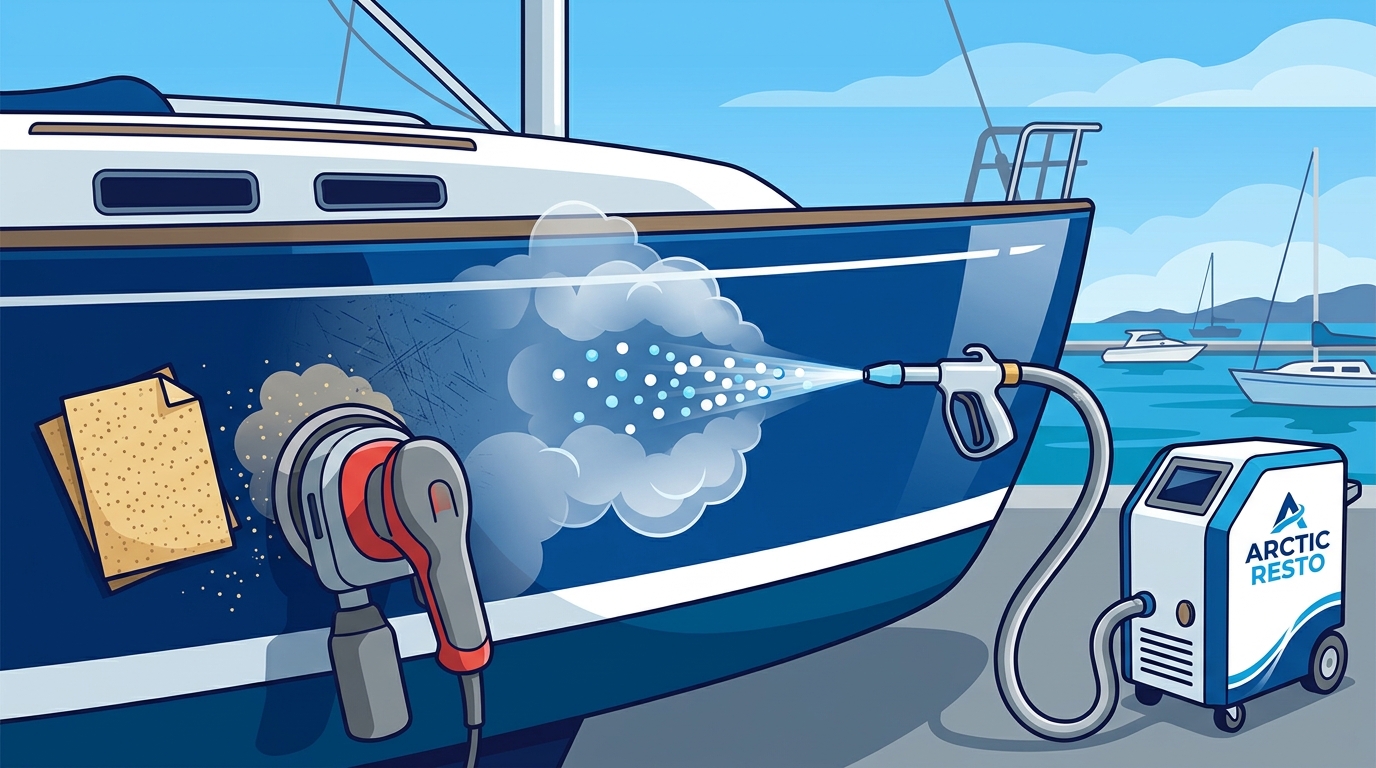
Dry ice blasting is non-abrasive, preventing the micro-scratches that traditional sanding causes. Unlike sandpaper or high-pressure water, which can erode the protective gelcoat layer, dry ice pellets sublimate upon impact. This phase change from solid to gas creates a gentle yet effective cleaning action. The result is a hull that retains its original factory finish and gloss for years longer.
2. Elimination of Toxic Chemical Residue
3. Extended Hull Lifespan Through Corrosion Prevention
Removing salt and mineral deposits prevents long-term corrosion of metal components. Connecticut's coastal waters can leave behind salt crystals that accelerate rust on through-hulls, propellers, and fittings. Dry ice blasting effectively removes these deposits without the moisture that traditional washing leaves behind. By eliminating the source of corrosion, you significantly extend the functional life of your boat's mechanical and structural parts.
4. Safe Cleaning of Delicate Interior Surfaces
The sublimation process allows for safe cleaning of electronics and upholstery without disassembly. Many boat owners avoid deep cleaning interiors due to the risk of water damage to wiring and electronics. Dry ice cleaning is completely dry, making it safe for use around sensitive equipment. This allows for a thorough sanitization of cabins, dashboards, and seating areas that would otherwise be skipped or cleaned with risky wet methods.
5. Reduced Maintenance Frequency Over Time
A deep clean at the molecular level reduces the frequency of required maintenance. Because dry ice cleaning removes contaminants at a deeper level than surface wiping, the buildup of grime and algae occurs more slowly. This means you spend less time and money on routine maintenance in the seasons following a professional dry ice clean. The long-term savings in labor and materials often offset the initial cost of the service.
6. Eco-Friendly Impact on Local Waterways
Zero runoff ensures your cleaning process does not harm Connecticut's local ecosystems. Traditional boat washing often sends soap, solvents, and dislodged pollutants directly into the water. Dry ice cleaning produces no liquid waste, and the sublimated gas dissipates harmlessly into the air. This aligns with the growing demand for sustainable boating practices and protects the health of local marinas and coastal waters.
7. Increased Resale Value Through Documented Care
Choosing the Right Service for Your Vessel
Selecting the right cleaning method depends on your boat's material and condition. For fiberglass and aluminum hulls, dry ice cleaning is an excellent choice for preserving finish. For wooden boats, it is the preferred method to avoid moisture damage. Always consult with a professional to determine the best approach for your specific vessel. Arctic Resto provides tailored solutions for various boat types, ensuring you get the right care for your investment.
Frequently Asked Questions
Is dry ice cleaning safe for all boat materials?
Yes, dry ice cleaning is generally safe for fiberglass, aluminum, steel, wood, and composite materials. It is non-abrasive and non-conductive, making it suitable for most marine applications. However, it is often recommended to test a small, inconspicuous area first to ensure compatibility with specific finishes or coatings.
How long does a dry ice cleaning session take for a boat?
Does dry ice cleaning remove paint or gelcoat?
No, dry ice cleaning is non-abrasive and does not remove paint or gelcoat. It removes dirt, grime, algae, and salt deposits without damaging the underlying surface. This is a key advantage over sandblasting or high-pressure washing, which can erode the finish.
Is dry ice cleaning environmentally friendly?
Can dry ice cleaning be done while the boat is in the water?
Yes, dry ice cleaning can be performed while the boat is in the water. This is one of the major advantages of the method, as it eliminates the need for dry-docking or hauling the boat out of the water. Arctic Resto's mobile service allows for on-site cleaning at your marina or dock.
How often should I have my boat dry ice cleaned?
The frequency depends on how often you use the boat and the conditions of the water. For most recreational boats, an annual deep clean is recommended. Boats used frequently in saltwater or algae-heavy areas may benefit from cleaning every six months. Regular maintenance helps preserve the boat's appearance and value. Learn more: arcticresto com.