
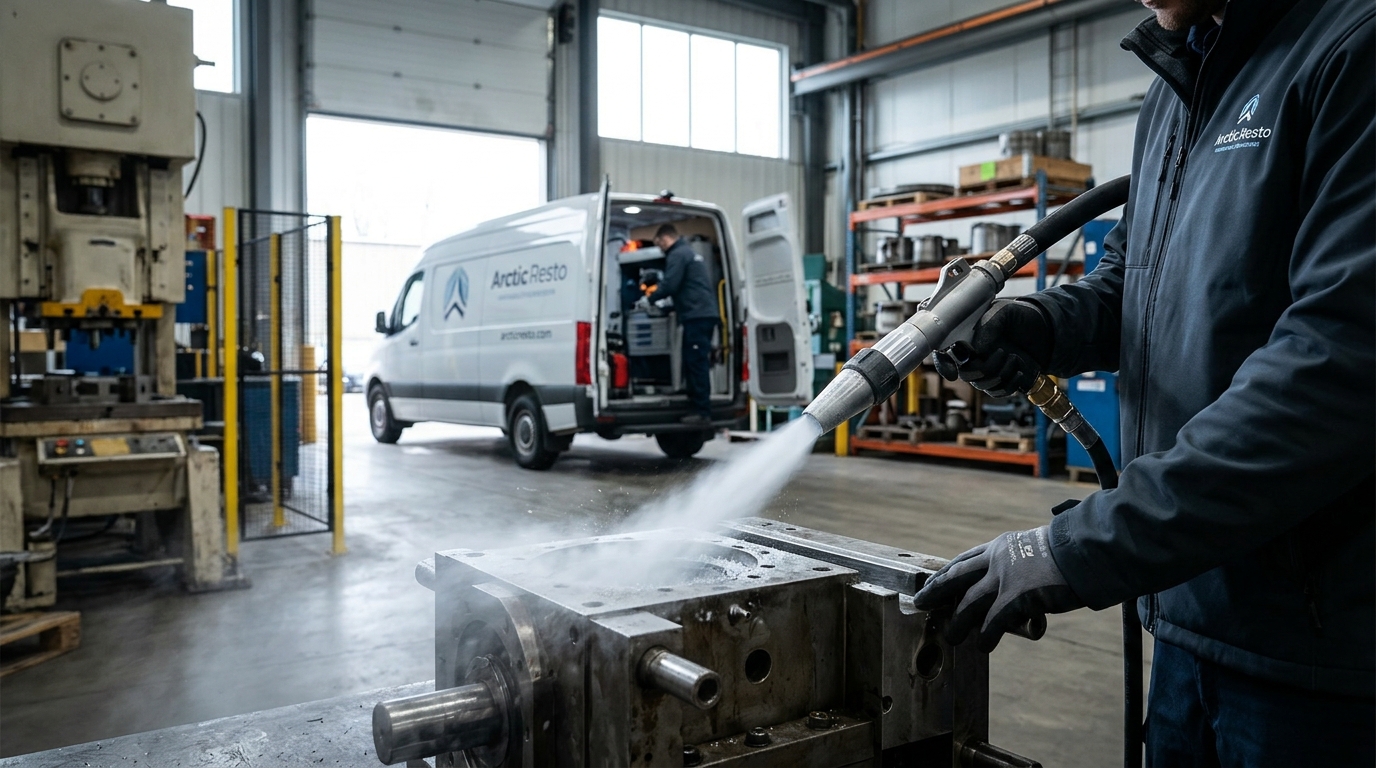
Arctic Resto provides mobile dry ice cleaning services for manufacturing facilities in Connecticut. This guide explains how to select a provider, verify credentials, understand costs, and evaluate long-term results. It covers the specific operational needs of industrial environments and the environmental benefits of water-free cleaning technology. For additional details, review the arcticresto com.
How to Choose a Provider
Selecting the right mobile dry ice cleaning company requires evaluating technical capability and operational flexibility. A reliable provider must possess industrial-grade equipment capable of handling heavy soot, grease, and polymer buildup. The vehicle fleet is a critical indicator of professionalism. Companies using fully outfitted commercial vans, such as the Mercedes Sprinter, demonstrate a commitment to on-site efficiency and minimal downtime. This setup allows technicians to bring the entire cleaning operation to your facility without requiring you to transport parts off-site. For additional details, review the .
Equipment Quality and Capacity
Environmental and Safety Standards
Modern manufacturing facilities prioritize sustainability and worker safety. A superior provider utilizes water-free and chemical-free technology. This approach eliminates the need for hazardous waste disposal and prevents corrosion of sensitive equipment. The cleaning medium, dry ice, sublimates upon impact, leaving no secondary waste behind. This characteristic is a distinct advantage over traditional methods that generate sludge or require chemical rinsing. For additional details, review the Customer Experience.
Questions to Ask Before Committing
Engaging a service provider requires clear communication about scope and expectations. You should ask specific questions to gauge the provider's experience with your industry. Inquire about their history with similar manufacturing processes. Ask how they handle tight production schedules and whether they can work during shifts or weekends. Understanding their logistical capabilities is just as important as their technical skills. For additional details, review the Frequently Asked Questions.
Scope and Logistics
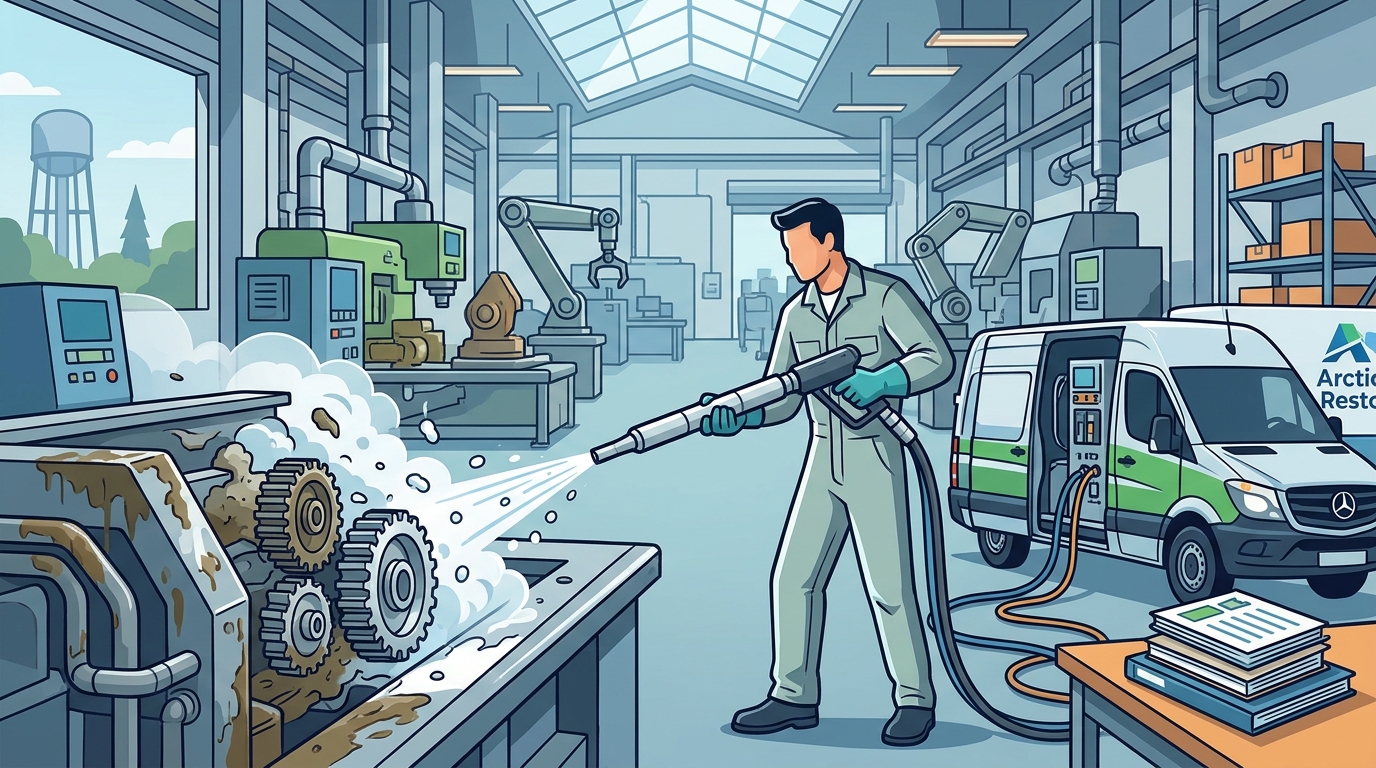
Ask the provider to define the scope of work in writing. This document should detail the specific equipment to be cleaned, the expected outcomes, and the timeline. Clarify who is responsible for moving machinery or components. A mobile service should minimize the need for disassembly, but you must confirm their protocol for handling large or fixed assets. Ensure they have the necessary power and air supply requirements for their equipment. For additional details, review the About.
Insurance and Liability
Verify that the provider carries comprehensive liability insurance. This protects your facility and your assets in the event of accidental damage. Ask for a certificate of insurance that names your company as an additional insured. This is a standard requirement for industrial service providers and demonstrates financial responsibility. Do not proceed with a provider who cannot provide current proof of coverage.
Verifying Claims and Credentials
Marketing claims can be misleading. It is essential to verify the credentials and past performance of any cleaning company. Check for professional certifications and industry memberships. While dry ice blasting is a specialized field, reputable companies often adhere to safety standards set by recognized bodies. Review their online presence and client testimonials. Look for case studies that detail specific problems solved in manufacturing environments.
Reference Checks
Request a list of recent clients in the manufacturing sector. Contact these references to ask about the quality of work and the professionalism of the crew. Ask specifically about any issues that arose during the cleaning process and how they were resolved. A provider with a strong reputation will be transparent about their track record and willing to connect you with satisfied customers.
On-Site Assessment
Before signing a contract, request an on-site assessment. This allows the provider to inspect the equipment and provide an accurate quote. It also gives you the opportunity to observe their professionalism and communication style. A thorough assessment ensures that the final price reflects the actual condition of the machinery. It helps prevent surprise costs due to unexpected buildup or access issues.
The Cleaning Process and Timeline
Understanding the workflow helps you plan for minimal disruption. The process begins with a site survey to identify the specific contaminants and access points. Technicians then prepare the area, which may involve covering sensitive components or securing the workspace. The actual blasting process involves directing a stream of dry ice pellets at the target surface. The impact causes the contaminants to fracture and lift off, while the sublimating ice provides a cooling effect that prevents thermal shock to the material.
Preparation and Setup
Setup time depends on the complexity of the job. For mobile units, this typically involves connecting to power and air sources and calibrating the blasting machine. Technicians will assess the surface condition and select the appropriate nozzle and pressure settings. This preparation phase ensures that the cleaning is effective and safe. It also allows the provider to identify any potential hazards in the work area.
Execution and Cleanup
The blasting process is rapid and efficient. Because dry ice sublimates, there is no need for water drainage or chemical neutralization. The cleanup phase involves removing any loose debris that may have fallen. Since the medium leaves no residue, the final step is often a simple inspection to confirm the surface is clean. The total time for a job varies based on the size of the equipment and the severity of the buildup.
Cost Drivers and Budgeting
Pricing for mobile dry ice cleaning is influenced by several factors. The primary cost driver is the labor time required to complete the job. This depends on the size of the equipment, the type of contaminant, and the accessibility of the surfaces. The complexity of the job also plays a role. Intricate machinery with many small components may take longer to clean than large, flat surfaces. The provider's overhead, including vehicle maintenance and equipment depreciation, is also factored into the price.
Factors Affecting Price
Consider the following elements when budgeting for a cleaning project. The condition of the equipment is a major factor. Heavily soiled or corroded surfaces require more time and effort. The location of the facility can also impact costs, particularly if travel time is significant. The frequency of cleaning is another consideration. Regular maintenance cleaning is often more cost-effective than emergency deep cleaning after a long period of neglect.
Value Proposition
While the upfront cost of dry ice blasting may be higher than some traditional methods, the long-term value is significant. The process extends the life of equipment by preventing corrosion and wear. It also reduces the need for costly repairs and replacements. The environmental benefits, such as reduced waste disposal fees, can also contribute to overall savings. Evaluating the total cost of ownership provides a clearer picture of the investment's return.
Common Mistakes to Avoid
Several common errors can undermine the effectiveness of a cleaning project. One major mistake is failing to define the scope of work clearly. Ambiguity in the contract can lead to disputes over what is included in the service. Another error is neglecting to verify the provider's insurance and credentials. This exposes your facility to potential liability. Rushing the assessment phase can also lead to inaccurate quotes and unexpected delays.
Scope Creep
Scope creep occurs when the project expands beyond the original agreement. This can happen if the provider discovers additional issues during the cleaning process. To avoid this, establish a clear protocol for handling unexpected findings. Agree in advance on how additional work will be priced and approved. This ensures transparency and prevents budget overruns.
Communication Gaps
Poor communication between your team and the service provider can lead to misunderstandings. Ensure that there is a single point of contact on both sides. Schedule regular check-ins during the project to review progress and address any concerns. Clear communication helps maintain a positive working relationship and ensures that the project stays on track.
Dry Ice vs. Alternative Methods
| Method | Medium | Waste Generated | Surface Impact | Environmental Profile |
|---|---|---|---|---|
| Dry Ice Blasting | CO2 Pellets | None (Sublimates) | Non-Abrasive | Water-Free, Chemical-Free |
| Sandblasting | Mineral Abrasives | High (Sludge) | Abrasive | Generates Particulate Waste |
| Chemical Cleaning | Solvents/Acids | Medium (Liquid Waste) | Corrosive Potential | Hazardous Chemical Use |
| Water Jetting | High-Pressure Water | Medium (Wet Waste) | Non-Abrasive | Water Consumption |
The table highlights the environmental and operational benefits of dry ice blasting. The absence of secondary waste simplifies the cleanup process and reduces disposal costs. The non-abrasive nature of the medium makes it suitable for delicate components that could be damaged by abrasive methods. The water-free process eliminates the risk of water damage and corrosion, which is a significant concern in manufacturing environments.
Application for Specific Manufacturing Cases
The effectiveness of dry ice blasting varies depending on the specific manufacturing application. For food and beverage production, the process is ideal for cleaning conveyors, mixers, and packaging lines. It removes organic residues without the need for chemical rinsing, which is critical for food safety. In the automotive sector, it is used for cleaning engines, transmissions, and assembly equipment. The process is also effective for removing paint, coatings, and adhesives from molds and dies.
Food and Beverage Industry
Hygiene is paramount in food manufacturing. Dry ice blasting provides a thorough clean that meets strict sanitation standards. The sublimation of the ice ensures that no cleaning agents remain on the equipment. This reduces the risk of contamination and cross-contamination. The process is also fast, allowing for quick turnaround times between production runs.
Automotive and Heavy Industry
Heavy machinery in the automotive sector often accumulates grease, oil, and metal shavings. Dry ice blasting effectively removes these contaminants without damaging the metal surfaces. The cooling effect of the ice helps to prevent thermal distortion, which is important for precision components. The process is also safe for electrical components, as the dry ice does not conduct electricity.
Regulatory Rules and Safety Protections
Industrial cleaning operations are subject to various safety and environmental regulations. Providers must comply with Occupational Safety and Health Administration (OSHA) guidelines regarding the use of compressed gases and blasting equipment. They must also adhere to environmental regulations concerning waste disposal and air quality. While dry ice blasting generates minimal waste, providers must still manage any loose debris responsibly. Workers must be trained in the safe operation of blasting equipment and the use of personal protective equipment.
Worker Safety
Environmental Compliance
Although dry ice sublimates into carbon dioxide, which is a natural component of the atmosphere, providers must still consider the environmental impact of their operations. The production of dry ice requires energy, and the release of CO2 contributes to greenhouse gas emissions. However, compared to chemical cleaning methods, the overall environmental footprint is significantly lower. Providers should be transparent about their sustainability practices and any efforts to reduce their carbon footprint.
Connecticut Local Specifics
Connecticut has a robust manufacturing sector, with a focus on advanced materials, biotechnology, and precision engineering. The state's regulatory environment is stringent, with strict standards for industrial safety and environmental protection. Providers operating in Connecticut must be familiar with local regulations and permit requirements. The climate in Connecticut can also impact cleaning operations. Cold weather may affect the handling of dry ice, while humidity can influence the sublimation rate. A local provider with experience in the region will be better equipped to handle these specific challenges.
Regulatory Environment
Market Dynamics
The competitive landscape for industrial cleaning services in Connecticut is evolving. Many providers are adopting sustainable practices to meet the demands of environmentally conscious manufacturers. Arctic Resto positions itself as a leader in this space, offering eco-friendly solutions that align with the values of modern manufacturing facilities. The company's mobile service model is particularly well-suited to the state's industrial parks and manufacturing hubs.
Strategic Timing for Maintenance
The timing of a cleaning project can significantly impact its outcome. Scheduling cleaning during planned maintenance windows minimizes disruption to production. It is also advisable to clean equipment before it reaches a critical level of contamination. Regular preventive cleaning extends the life of machinery and prevents unexpected breakdowns. Seasonal factors can also influence timing. For example, cleaning outdoor equipment before winter can prevent damage from ice and snow.
Preventive Maintenance
Incorporating dry ice blasting into a preventive maintenance program is a best practice. Regular cleaning intervals, such as quarterly or semi-annually, help to maintain equipment performance. This approach reduces the need for emergency repairs and extends the lifespan of assets. It also allows for the early detection of potential issues, such as wear or corrosion. A proactive approach to maintenance is more cost-effective than a reactive one.
Production Scheduling
Coordinate the cleaning schedule with your production plan to minimize downtime. If possible, schedule cleaning during periods of lower production demand. This allows the provider to work without interrupting critical operations. Clear communication with your production team is essential to ensure that the cleaning process does not conflict with scheduled tasks. Flexibility in scheduling is a key advantage of mobile service providers.
Long-Term Measurable Outcomes
Equipment Longevity
Proper cleaning prevents the buildup of contaminants that can cause corrosion and wear. This extends the operational life of equipment and delays the need for replacement. The non-abrasive nature of dry ice blasting ensures that the base material is not damaged, preserving the integrity of the component. Long-term data on equipment performance can demonstrate the value of regular cleaning.
Operational Efficiency
Clean equipment operates more efficiently, leading to reduced energy consumption and improved output. The removal of buildup from heat exchangers, for example, improves heat transfer and reduces energy usage. This can result in significant cost savings over time. Monitoring energy usage and production rates provides a clear picture of the operational benefits of dry ice blasting.
Key Takeaways
- Select a provider with industrial-grade equipment and a professional vehicle fleet.
- Verify the provider's insurance, credentials, and past performance before committing.
- Understand the cost drivers, including labor time, equipment complexity, and location.
- Avoid common mistakes such as unclear scope definitions and poor communication.
- Dry ice blasting is non-abrasive, water-free, and chemical-free, offering environmental benefits.
- Schedule cleaning during planned maintenance windows to minimize production disruption.
- Track long-term outcomes such as equipment longevity and operational efficiency.
Frequently Asked Questions
Does Arctic Resto serve manufacturing facilities in Connecticut?
Yes, Arctic Resto provides mobile dry ice cleaning services for manufacturing facilities in Connecticut. The company utilizes fully outfitted vans to deliver professional results with minimal downtime.
Is dry ice blasting safe for delicate equipment?
Yes, dry ice blasting is non-abrasive and does not damage the base material. The cooling effect of the ice also prevents thermal shock, making it suitable for delicate components.
How long does a typical cleaning job take?
The duration of a cleaning job depends on the size of the equipment and the severity of the buildup. Small components may take a few hours, while large machinery may require a full day or more.
What are the environmental benefits of dry ice blasting?
Dry ice blasting is water-free and chemical-free. The dry ice sublimates upon impact, leaving no secondary waste behind. This reduces the need for hazardous waste disposal and minimizes the environmental footprint.
How much does mobile dry ice cleaning cost?
Costs vary based on labor time, equipment complexity, and location. It is best to request an on-site assessment for an accurate quote. Regular preventive cleaning is often more cost-effective than emergency deep cleaning.
Do I need to move my equipment off-site for cleaning?
No, Arctic Resto is a mobile service provider. The company brings the cleaning equipment to your facility, eliminating the need to transport parts off-site. This minimizes downtime and logistical challenges.
What safety measures are in place during the cleaning process?
Technicians wear appropriate personal protective equipment, and the work area is ventilated to ensure safe carbon dioxide levels. Providers must comply with OSHA guidelines and have clear safety protocols in place.
How often should I schedule dry ice blasting for my equipment?
The frequency of cleaning depends on the operating environment and the type of contaminants. A preventive maintenance program with regular cleaning intervals is recommended to extend equipment life and maintain efficiency. Learn more: arcticresto com.