
Arrival and Mobile Unit Setup
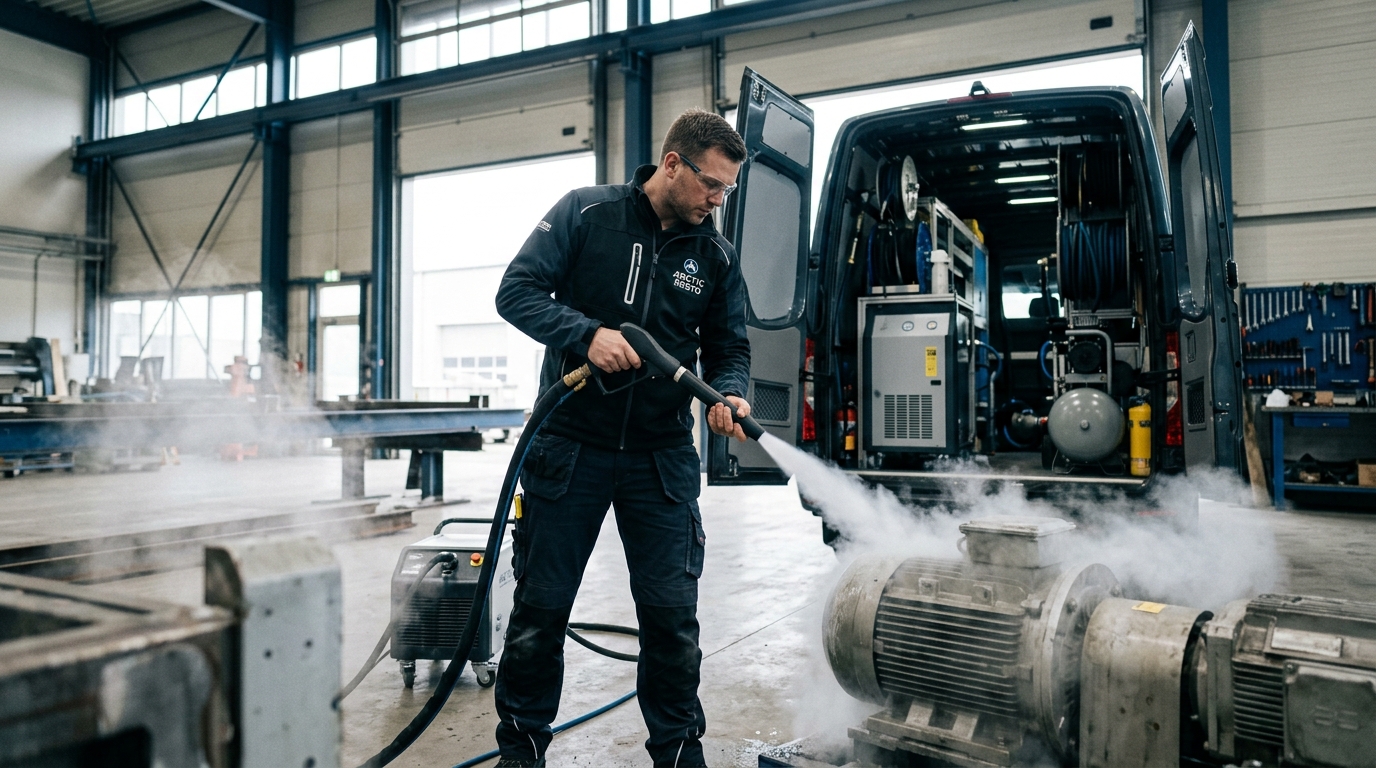
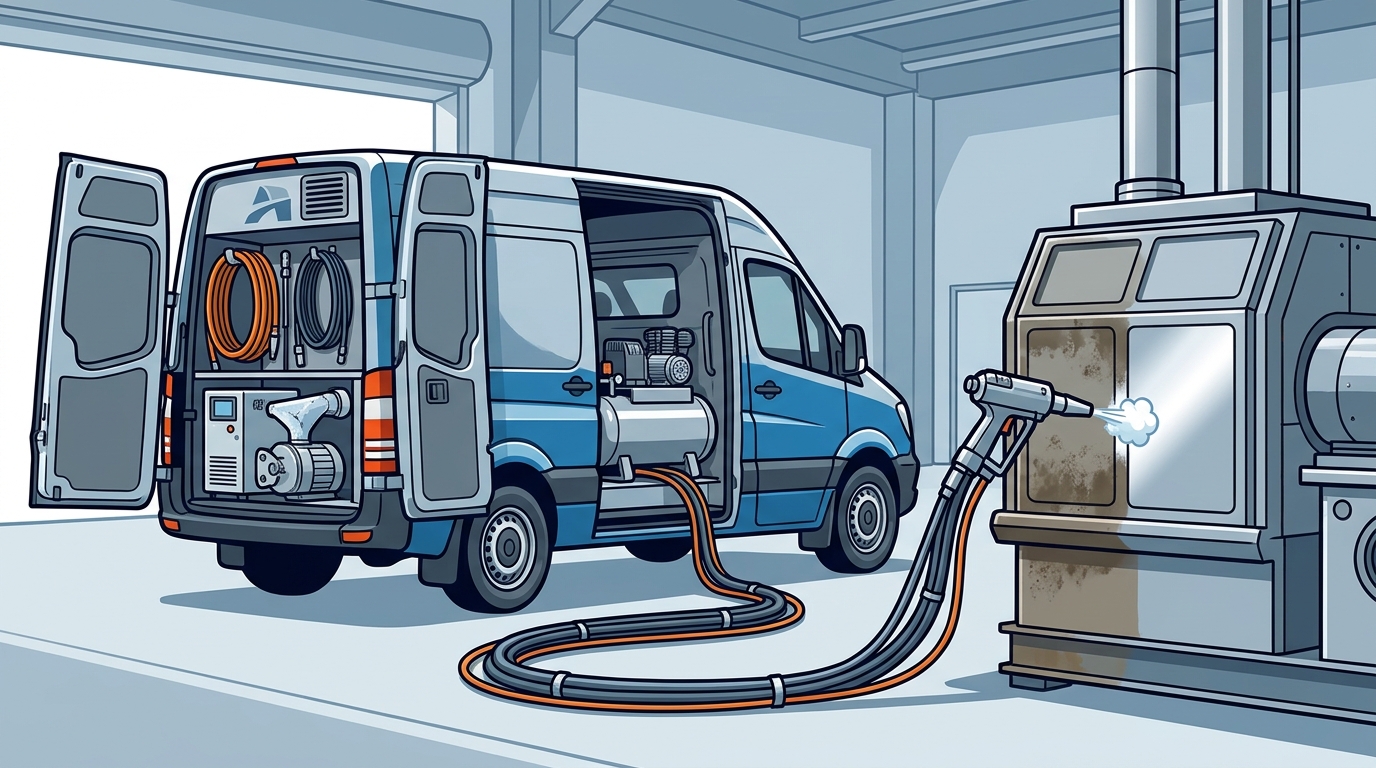
The process begins when the technician arrives at your facility in a fully outfitted mobile unit. Arctic Resto utilizes Mercedes Sprinter vans that are engineered to house all necessary equipment, including the dry ice generator, compressed air compressor, and blasting tools. The vehicle is designed to be self-sufficient, meaning it does not rely on your site's power grid or water supply. This independence is critical for industrial environments where utility access may be limited or where water usage is strictly regulated. For additional details, review the arcticresto com.
Upon arrival, the technician assesses the work area to ensure safety and accessibility. They position the van in a location that allows for efficient cable management and safe pedestrian traffic. The setup phase typically takes less than thirty minutes, allowing the cleaning process to begin quickly. This rapid deployment is a key advantage over traditional cleaning methods that require extensive preparation, such as laying down plastic sheeting or setting up water drainage systems. For additional details, review the .
The Blasting Process and Physics
Dry ice blasting is a kinetic cleaning method that relies on the physical properties of solid carbon dioxide. Dry ice is a solid form of carbon dioxide that sublimates, or transitions directly from a solid to a gas, at minus 109 degrees Fahrenheit. When these pellets are accelerated through a nozzle by compressed air, they strike the surface at high speed. The impact causes the dirt, grease, or residue to fracture and lift away from the substrate. For additional details, review the Customer Experience.
The sublimation of the dry ice pellet upon impact creates a micro-explosion that helps dislodge contaminants. Because the dry ice turns into gas immediately, there is no secondary waste to clean up. This is a defining characteristic of the technology. The process is non-abrasive, meaning it does not damage the underlying material, whether it is metal, plastic, wood, or sensitive electronics. This makes it suitable for a wide range of industrial and commercial applications, from food processing equipment to historical restoration. For additional details, review the Frequently Asked Questions.
Safety and Environmental Impact
One of the primary benefits of mobile dry ice cleaning is its environmental profile. The process is water-free and chemical-free, which eliminates the risk of water damage, rust, or chemical runoff. This is particularly important in facilities where water usage is restricted or where chemical disposal is a regulatory burden. The dry ice pellets are biodegradable and leave no residue, making the process safe for families, pets, and sensitive environments. For additional details, review the About.
Minimizing Downtime and Maximizing Efficiency
Time is a critical factor in industrial and commercial operations. Mobile dry ice cleaning is designed to minimize downtime by allowing the cleaning to be performed in place. There is no need to disassemble equipment or transport it to an off-site facility for cleaning. This in-situ approach allows businesses to maintain production schedules with minimal interruption. The technician can clean specific components or entire systems while the rest of the facility continues to operate.
The efficiency of the process is further enhanced by the precision of the blasting tools. Technicians can adjust the air pressure and nozzle distance to target specific areas without affecting surrounding components. This precision is crucial for delicate equipment, such as circuit boards or medical devices, where damage must be avoided. The ability to clean in place and with high precision makes mobile dry ice cleaning a practical solution for businesses that cannot afford extended downtime.
Post-Cleaning Inspection and Handoff
Once the cleaning is complete, the technician performs a final inspection to ensure the surface meets the required standards. Because there is no secondary waste, the area is ready for immediate use. The technician may provide a brief report on the condition of the equipment and any recommendations for future maintenance. This handoff process is quick and straightforward, allowing the client to resume operations immediately.
Key Takeaways
- Mobile dry ice cleaning is a self-contained process that does not require water or electricity from the client's site.
- Arctic Resto utilizes specialized Mercedes Sprinter vans to deliver the service directly to your location.
- The process is non-abrasive and safe for a wide range of materials, including sensitive electronics.
- On-site cleaning minimizes downtime by allowing equipment to be cleaned in place without disassembly.
- The method is water-free and chemical-free, supporting sustainable and environmentally responsible practices.
Frequently Asked Questions
Does mobile dry ice cleaning require water or electricity from my facility?
No, the mobile unit is fully self-contained. It has its own power source and does not require water or electricity from your site. This makes it ideal for locations with limited utility access.
Is dry ice blasting safe for sensitive equipment?
Yes, the process is non-abrasive. The dry ice pellets are soft enough to clean without damaging the underlying material, making it safe for electronics, plastics, and other sensitive components.
How much downtime is required for the cleaning process?
Downtime is minimal because the cleaning is performed in place. There is no need to disassemble equipment or transport it off-site. The process can often be completed in a matter of hours, depending on the size and complexity of the equipment.
What happens to the dry ice after it hits the surface?
The dry ice sublimates, or turns into gas, immediately upon impact. This means there is no secondary waste to clean up, and the area is ready for use as soon as the blasting is complete.
Can mobile dry ice cleaning be used in food processing facilities?
Yes, the process is water-free and chemical-free, making it suitable for food processing environments. It helps maintain hygiene standards without the risk of water damage or chemical contamination.
How does Arctic Resto ensure safety during the on-site process?
Arctic Resto technicians follow strict safety protocols, including proper positioning of the mobile unit and management of compressed air lines. The process is designed to be safe for workers and the environment, with no hazardous materials involved. Learn more: arcticresto com.